



Choosing a course after Class 12th can feel overwhelming, especially for commerce students. With so many options available today, from traditional degree programs to professional and emerging career-oriented courses, students often ask one question:
Which course is best after 12th commerce?
The answer depends on your interests, career goals, and the kind of future you want to build.
Some students want careers in business and management. Others are drawn toward finance, law, technology, or entrepreneurship. The good news is that commerce opens doors to all of these pathways.
In this guide, we explore some of the best courses after 12th for commerce students in 2026, along with career opportunities, salary scope, and tips to help you choose wisely.
Why Choosing the Right Course After 12th Matters
Your undergraduate course often shapes the direction of your professional journey. A thoughtful choice today can create stronger opportunities tomorrow.
Choosing the right course can help you:
- Build a career aligned with your interests
- Improve long-term salary growth
- Develop relevant professional skills
- Prepare for future studies or competitive exams
- Enter industries with strong demand and growth
Rather than following trends alone, focus on choosing a course that balances passion, aptitude, and career potential.
Top Courses After 12th for Commerce Students
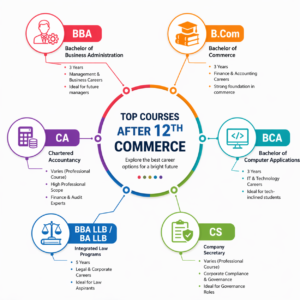
| Course | Duration | Career Scope | Ideal For |
| BBA | 3 Years | Management & Business | Future managers |
| B.Com | 3 Years | Finance & Accounting | Commerce-focused students |
| BCA | 3 Years | IT & Tech Careers | Tech-inclined students |
| BA LLB / BBA LLB | 5 Years | Legal Careers | Law aspirants |
| CA | Varies | High professional scope | Finance-focused students |
| CS | Varies | Corporate compliance | Governance roles |
Each course offers a different pathway. Let’s understand them in more detail.
Detailed Overview of Best Commerce Courses
1. BBA (Bachelor of Business Administration)
BBA is a popular option for students interested in management, leadership, and business operations. It introduces students to marketing, finance, HR, and entrepreneurship.
Skills You Learn
- Business communication
- Leadership and decision-making
- Management fundamentals
- Problem-solving and teamwork
Career Options
- Business Executive
- Marketing Associate
- HR Executive
- Sales Manager
- Entrepreneur
Who Should Choose It?
Students interested in business, management, or pursuing an MBA later often consider BBA a strong option.
Explore BBA full course details (2026).
2. B.Com (Bachelor of Commerce)
B.Com remains one of the most established commerce degrees, especially for students interested in accounting, taxation, and finance.
Skills You Learn
- Accounting principles
- Financial analysis
- Taxation basics
- Business law fundamentals
Career Options
- Accountant
- Financial Analyst
- Banking Roles
- Auditor
- Tax Consultant
Who Should Choose It?
Ideal for students who want a strong commerce foundation or may pursue CA, MBA, or M.Com later.
Explore B.Com Course details and list of specializations.
3. BCA (Bachelor of Computer Applications)
Commerce students with an interest in technology can also explore BCA. With digital careers growing rapidly, this course has become increasingly relevant.
Skills You Learn
- Programming basics
- Software concepts
- Data management
- Web technologies
Career Options
- Software Developer
- IT Analyst
- Web Developer
- Data Support Roles
Who Should Choose It?
Students inclined toward tech and digital careers may find BCA a future-oriented choice.
Explore more details about BCA.
4. BA LLB / BBA LLB
Integrated law programs combine legal education with arts or management studies and open pathways into the legal profession.
Skills You Learn
- Legal reasoning
- Research and drafting
- Advocacy skills
- Analytical thinking
Career Options
- Lawyer
- Corporate Legal Advisor
- Legal Consultant
- Judiciary (through exams)
Who Should Choose It?
Students interested in law, corporate regulations, or legal careers may consider this route.
5. CA (Chartered Accountancy)
CA is one of the most respected professional paths in commerce.
Skills You Learn
- Auditing
- Taxation
- Financial reporting
- Strategic finance
Career Options
- Chartered Accountant
- Auditor
- Finance Consultant
- Corporate Finance Roles
Who Should Choose It?
Students with strong interest in finance and commitment toward rigorous professional preparation.
Students with a strong interest in finance and commitment toward rigorous professional preparation may consider CA a rewarding career path. For admission pathway, syllabus, and exam structure, students can refer to Official ICAI details and eligibility for accurate information.
6. CS (Company Secretary)
CS focuses on corporate law, governance, and compliance.
Skills You Learn
- Corporate regulations
- Governance practices
- Compliance management
- Legal documentation
Career Options
- Company Secretary
- Compliance Officer
- Governance Consultant
Who Should Choose It?
Suitable for students interested in corporate legal and compliance roles. Students who want to understand the course structure, exams, and professional pathway can explore official ICSI information for CS aspirants for detailed guidance.
Career Opportunities After These Courses
Commerce backgrounds can lead to careers across multiple industries.
Popular Career Roles
- Financial Analyst
- Business Executive
- Software Professional
- Corporate Lawyer
- Accountant
- Entrepreneur
Industries Hiring Commerce Graduates
- Banking
- IT
- Consulting
- Corporate Sector
- Law Firms
- FMCG
Career growth often depends not only on the degree but also on skills, internships, and practical exposure.
Salary Scope After Commerce Courses
| Course | Starting Salary | Growth Potential |
| BBA | ₹3–5 LPA | High |
| B.Com | ₹3–4.5 LPA | Moderate to High |
| BCA | ₹4–6 LPA | High |
| BA LLB | ₹4–7 LPA | High |
| CA | ₹7+ LPA | Very High |
Salary ranges can vary based on skill set, experience, institution, and industry.
How to Choose the Right Course After 12th Commerce
There is no one-size-fits-all answer. The “best” course depends on you.
Consider these factors:
Choose Based on Interests
If you enjoy business, BBA may suit you. If finance excites you, B.Com or CA may be worth exploring.
Consider Career Goals
Ask yourself what kind of success you want to achieve five years from now.
Evaluate Salary and Growth
Look beyond first salaries and consider long-term growth.
Think About Future Studies
Some courses align well with postgraduate options like MBA, LLM, or specialized certifications.
Understand Market Demand
Emerging industries may influence future opportunities.
Choosing wisely often means balancing passion with practicality.
Professional Courses vs Traditional Courses
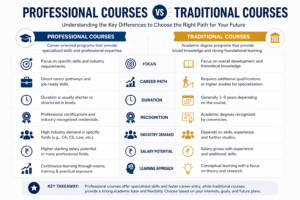
Students often compare professional and conventional options. Both have value.
BBA vs B.Com
- BBA focuses more on management and business skills
- B.Com offers stronger grounding in commerce and finance
CA vs B.Com
- CA is a professional qualification
- B.Com is a broader academic degree
Professional vs Traditional Programs
Professional courses may offer direct career pathways, while traditional degrees can provide flexibility and strong academic foundations.
The right choice depends on individual goals.
Choosing the Right College Matters Too
The course matters but so does the institution.
While evaluating colleges, consider:
- Faculty quality
- Placement support
- Practical learning opportunities
- Infrastructure
- Industry exposure
Students exploring colleges in education hubs like Indore often compare these factors carefully before taking admission. It is also advisable to verify whether an institution is among UGC-recognized colleges in India before making a decision. Institutions that emphasize practical and career-oriented learning often offer added value.
Frequently Asked Questions
Which is the best course after 12th commerce?
There is no universal “best” course. Popular options include BBA, B.Com, CA, BCA, and law programs depending on career goals.
Which course has the highest salary in commerce?
Professional paths like CA often have strong salary potential, though growth depends on skills and experience.
Is BBA better than B.Com?
Both have strengths. BBA is management-focused, while B.Com has stronger commerce foundations.
What are professional courses after 12th commerce?
CA, CS, CMA, integrated law programs, and some management programs are often considered professional options.
Can commerce students go into law?
Yes, integrated law programs like BA LLB and BBA LLB are popular choices.
Which commerce course has best future scope?
Courses aligned with business, finance, law, and digital sectors continue to show strong demand.
Conclusion
Commerce students today have far more opportunities than ever before. From business and finance to law and technology, multiple pathways can lead to rewarding careers.
The best course after 12th commerce is not the same for everyone. It depends on your interests, career ambitions, and long-term vision.
Choose a course thoughtfully. Choose a college carefully. And focus on building skills along with earning a degree because that combination often creates the strongest careers.

