For many students, fashion design looks like a purely creative field sketching outfits, choosing colors, and imagining new styles. That perception is understandable, but it only tells part of the story.
A fashion design course is far more structured and industry-driven than it appears from the outside. It blends creativity with technical knowledge, business understanding, and practical application.
So, what do students actually study in a fashion design course?
This guide breaks it down in a clear and realistic way covering subjects, skills, practical exposure, and how all of it connects to real-world careers.
Quick Answer
Students in a fashion design course study a combination of creative, technical, and business-focused subjects. These typically include fashion illustration, textile science, pattern making, garment construction, fashion marketing, and digital design tools. The course combines theory with hands-on learning, helping students understand fabrics, create garments, develop design concepts, and build a professional portfolio suited for the fashion industry.
What Is a Fashion Design Course?
A fashion design course is a structured program designed to prepare students for careers in the fashion and apparel industry.

It is offered in different formats:
- Degree programs (usually 3–4 years)
- Diploma courses (1–2 years)
- Certificate programs (short-term)
At its core, the course focuses on three key areas:
- Creative design skills
- Technical garment construction
- Understanding of the fashion business
This combination is what makes the course both practical and industry-relevant. Students often explore official fashion design curriculum and industry exposure insights while understanding how professional fashion education is structured in India.
Subjects in a Fashion Design Course
The curriculum is carefully designed to build knowledge step by step from basic concepts to advanced application.
Design Fundamentals
This is where everything begins.
Students learn:
- Elements and principles of design
- Color theory and combinations
- Visual balance and composition
These concepts form the foundation for all future design work.
Fashion Illustration & Sketching
Before a garment is created, it is visualized.
Students are trained in:
- Drawing fashion figures
- Sketching garments
- Creating mood boards
This helps them communicate their ideas clearly and professionally.
Textile & Fabric Studies
Understanding fabric is essential in fashion.
Students explore:
- Different types of fabrics (natural and synthetic)
- Dyeing and printing techniques
- Fabric texture, durability, and behavior
This knowledge directly impacts how designs function in real life.
Explore the Role of a Textile Designer in fashion industry.
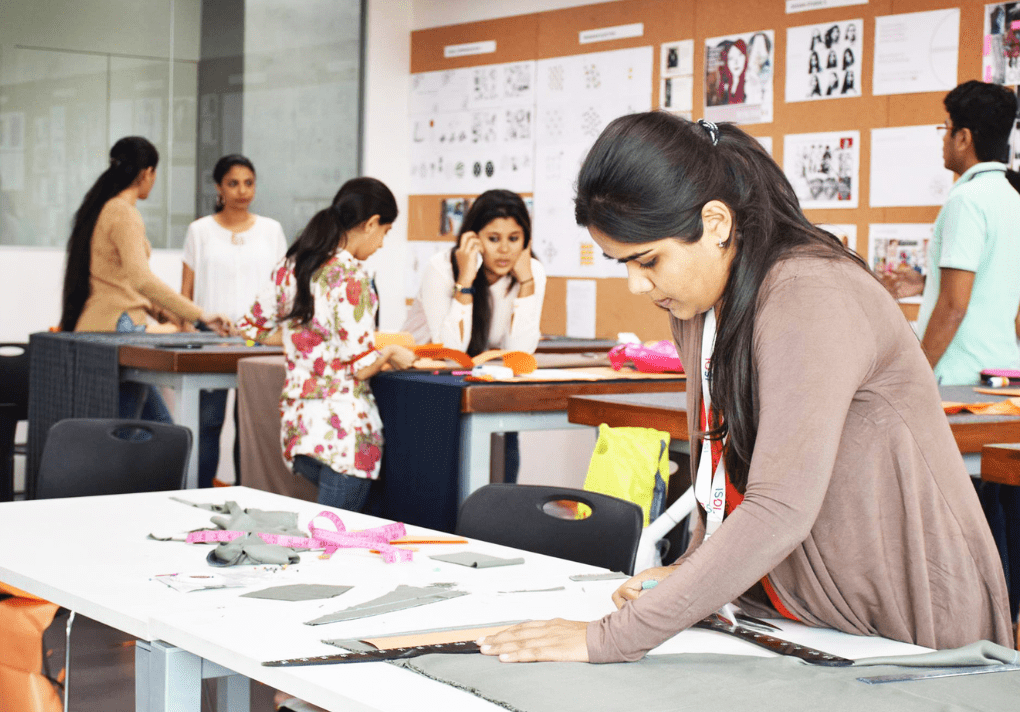
Pattern Making & Garment Construction
This is where ideas turn into actual products.
Students learn:
- Pattern drafting
- Draping techniques
- Cutting, stitching, and finishing
It is one of the most practical and skill-intensive parts of the course.
Fashion Technology & CAD
Modern fashion design is closely linked with technology.
Students are introduced to:
- Computer-Aided Design (CAD)
- Digital illustration tools
- Software used in the fashion industry
This ensures they stay relevant in a tech-driven design environment.
Fashion Marketing & Merchandising
Fashion is not just about design it is also about business.
Students study:
- Branding and positioning
- Retail management
- Consumer behavior
This helps them understand how fashion products reach the market.
Portfolio Development
Toward the final stages of the course, students focus on building their portfolio.
This includes:
- Design collections
- Final projects
- Presentation techniques
A strong portfolio often becomes the key to internships and job opportunities.
Skills You Learn in a Fashion Design Course
Beyond subjects, the course helps students develop a wide range of skills.

Some of the most important ones include:
- Creative thinking and visualization
- Attention to detail
- Technical garment skills
- Communication and presentation
- Trend awareness and analysis
These skills are what employers often look for in fashion graduates.
Practical Learning in Fashion Design
One of the defining aspects of this course is its practical nature.
Students are not limited to classrooms. They actively engage in:
- Studio-based learning
- Workshops and live projects
- Internships with designers or brands
- Fashion shows and exhibitions
This exposure helps bridge the gap between theory and real-world application. Students also benefit from understanding Indian fashion industry trends and professional fashion ecosystem as practical exposure becomes increasingly important in modern fashion education.
Fashion Design Course Structure
While the exact structure may vary, a typical progression looks like this:
| Year | Focus Area |
|---|---|
| 1st Year | Basics of design, sketching, textiles |
| 2nd Year | Pattern making, garment construction |
| 3rd Year | Advanced design and specialization |
| Final Year | Portfolio, internship, and major projects |
This gradual progression ensures that students build both confidence and competence.
What Makes This Course Different?
Fashion design stands apart from many traditional courses because of its unique combination of elements.
- It blends creativity with technical skills
- It includes hands-on, project-based learning
- It emphasizes portfolio development over just theoretical exams
- It connects directly with industry practices
In simple terms, students don’t just study they create, experiment, and present.
Who Should Choose Fashion Design?
This course is best suited for students who:
- Have an interest in creativity and aesthetics
- Enjoy working with colors, fabrics, and ideas
- Are curious about fashion trends and styling
- Prefer practical learning over purely theoretical study
It may not be ideal for those who prefer highly structured or non-creative fields.
Career Opportunities After Studying Fashion Design
A fashion design course can open doors to multiple career paths.
Some common roles include:
- Fashion Designer
- Stylist
- Textile Designer
- Fashion Merchandiser
- Costume Designer
- Entrepreneur or brand owner
Choosing the Right Fashion Design College
The college you choose can significantly influence your learning experience.
While evaluating options, consider:
- Faculty expertise
- Availability of practical labs and studios
- Internship opportunities
- Industry exposure
- Portfolio development support
Institutions that focus on both creativity and real-world application often provide better long-term value. In education hubs like Indore, students often explore institutes such as GSFD for their industry-oriented learning approach and focus on practical fashion education.
What You Study in a Fashion Design Course
A simple way to understand the journey:
Design Basics → Illustration → Textiles → Construction → Technology → Portfolio
This flow shows how students move from learning fundamentals to creating industry-ready work.
Frequently Asked Questions
What subjects are taught in a fashion design course?
Students typically study design fundamentals, fashion illustration, textiles, garment construction, CAD, and fashion marketing.
Is fashion design only about drawing?
No. While drawing is important, the course also includes technical, business, and practical aspects.
Do you need drawing skills for fashion design?
Basic drawing skills help, but they can be developed during the course.
How many years is a fashion design course?
Degree courses usually take 3–4 years, while diplomas are shorter.
Is fashion design a practical course?
Yes. It heavily focuses on hands-on learning, projects, and real-world exposure.
Conclusion
So, what do you study in a fashion design course?
Much more than just creativity.
It is a balanced mix of design, technical skills, and business understanding. Students learn how to transform ideas into garments, understand fabrics, use technology, and present their work professionally.
In the end, a fashion design course does not just teach you how to design it prepares you to build a career in an industry that values both imagination and execution.
And that combination is what truly sets it apart.