Picture this: You’ve just finished your 12th board exams. You’ve been sketching outfits in your notebook margins since Class 7. You know fashion is your thing. But now everyone around you parents, relatives, that one “helpful” uncle has an opinion about what you should study next.
Degree or diploma?
Here’s the truth: there’s no one-size-fits-all answer, just like there’s no one-size-fits-all in fashion. But what you can do is understand both options so deeply that by the time you finish reading this, the decision practically makes itself.
This guide cuts through the confusion and gives you a clear, honest picture of what a degree and a diploma in fashion designing actually mean for your career, your wallet, and your future.
Quick Answer: Degree vs Diploma in Fashion Designing
If you’re in a hurry (we get it), here’s the short version:
If your five-year plan involves working with recognizable fashion labels or continuing into higher education, a degree builds the foundation that actually supports that kind of growth. It’s the slower road, but it leads to a wider highway.
Go for a diploma if you want to learn fast, spend less, and start working in the industry within a year or two. It’s the express lane less scenic, but you get there quicker.
Now, if you want the real breakdown the kind that actually helps you decide keep reading.
Quick Comparison Table
| Factor | Degree in Fashion Designing | Diploma in Fashion Designing |
| Duration | 3–4 Years | 1–2 Years |
| Learning Approach | Comprehensive | Practical & Skill-Based |
| Industry Exposure | Higher | Moderate |
| Cost | Higher | Lower |
| Career Growth | Strong Long-Term Potential | Good Entry-Level Opportunities |
| Higher Studies | Eligible | Limited Options |
| Best For | Long-Term Career Building | Quick Industry Entry |
Degree vs Diploma in Fashion Designing: Key Differences Explained
Think of it this way: a degree is like learning to cook in a professional culinary school you study ingredients, techniques, food science, plating, restaurant management, the whole ecosystem. A diploma is like joining a focused 6-month cooking course that teaches you exactly how to prepare 10 dishes really well and get into a kitchen fast.
Both produce people who can cook. But what they cook, where they cook it, and how far they go in that kitchen that’s where the difference shows.
A degree in fashion designing is a full 3–4 year undergraduate program. You don’t just learn how to stitch and sketch. You study textiles, garment construction, fashion history, branding, merchandising, consumer psychology, fashion marketing, and how the global fashion industry actually works. You’re being trained to think like a fashion professional, not just work like one.Many leading institutions, including NIFT (National Institute of Fashion Technology), follow this comprehensive approach to fashion education.
A diploma in fashion designing is a focused 1–2 year program. The emphasis is on doing sketching, pattern-making, garment construction, draping, styling, and design software. You build a portfolio, develop hands-on skills, and step into the industry faster.
Neither is superior by default. Both roads lead somewhere good the one you pick should match the destination you have in mind.
Explore: Top 10 Software Tools for Fashion Design Students
Who Should Choose a Degree in Fashion Designing?
If you’ve ever thought “I want to work with a brand like Zara or Fabindia someday” or “I want to launch my own fashion label” a degree is probably calling your name.
Here’s the kind of student a degree is designed for:
- You want to understand fashion as a business, not just a craft
- You’re interested in brand building, fashion marketing, or merchandising alongside design
- You want more time to explore different areas before specializing
- You’re thinking about postgraduate studies an MBA in Fashion Management, or a Masters in Design
- You want access to structured internships and industry mentors during your education
Popular Career Options After a Degree:
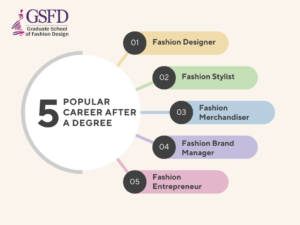
One major advantage of a degree? The network you build. By the time you graduate, you are not just walking out with a certificate you are walking out with a portfolio, a peer group, and industry connections built over years of real exposure.
Who Should Choose a Diploma in Fashion Designing?
A diploma is not plan B. For the right student with the right goals, it is the most practical and efficient decision they can make.
A diploma makes sense if:
- You want to start working sooner and gain real industry experience early
- You’re more of a hands-on learner who gets bored in theory-heavy classrooms
- Budget is a real consideration and you need a more affordable path
- You already have a clear, specific skill you want to develop say, pattern-making or styling
- You already have a business idea brewing maybe a boutique, maybe a freelance styling career and you just need the skills to make it real.
Popular Career Options After a Diploma:
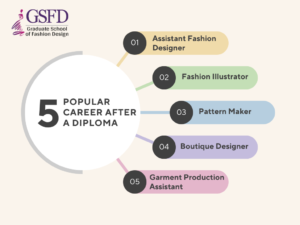
Here’s something nobody tells you enough: the fashion industry rewards portfolios, not just degrees. A diploma student with a strong body of work and sharp skills can outshine a degree holder who coasted through four years. What you do with your qualification matters more than the qualification itself.
Explore: What Do You Study in a Fashion Design Course?
Career Scope After Degree vs Diploma in Fashion Designing
Let’s talk about where each path actually takes you because that’s what this decision is really about.
| Career Factor | Degree | Diploma |
| Entry-Level Jobs | Good | Good |
| Career Advancement | Higher | Moderate |
| Leadership Roles | Better Opportunities | Limited Initially |
| International Opportunities | Higher | Moderate |
| Higher Education Eligibility | Yes | Limited |
At the entry level, both degree and diploma holders can land jobs the fashion industry doesn’t gatekeep junior roles by qualification alone. But as you move up the ladder, the gap starts to show.
Leadership roles in established fashion houses Creative Director, Design Head, Brand Strategist tend to go to candidates with both strong portfolios and strong educational foundations. A degree gives you that foundation.
International opportunities also open up more naturally with a degree, especially if you plan to apply to global brands or take up higher education abroad.
That said, diploma holders who hustle hard, build great portfolios, and keep upskilling often break through these ceilings too. The industry respects talent.
Degree or Diploma in Fashion Designing: Which Has Better Career Growth?

Here’s the honest answer: for most students, a degree offers better long-term career growth. But “most students” isn’t you specifically.
A degree exposes you to the full spectrum of the fashion world not just design, but business, branding, consumer behavior, textile science, and sustainability trends. The fashion industry in 2025 and beyond is looking for professionals who can do more than just design beautiful clothes. They want people who understand why those clothes sell, who buys them, and how to tell their story.
Degree programs build that broader perspective over time.
But here’s the flip side a diploma is incredibly effective for students with a clear, focused goal. If you know you want to be a boutique owner in two years, a diploma gets you there faster and more affordably. Spending four years in college to open a local boutique might actually slow you down more than it helps.
The real secret to career growth in fashion is simple: skills + portfolio + experience. Whether you’re a degree or diploma holder, these three things will carry your career further than any certificate on your wall.
Our Recommendation for Students
Still on the fence? Here’s a direct recommendation:
Choose a Degree If:
- You want to work with established fashion brands eventually
- You’re interested in the business side of fashion, not just design
- You may want to pursue a postgraduate degree later
- You want more time to explore and find your niche in fashion
- You value structured industry exposure and networking opportunities
Choose a Diploma If:
- You want to start working within 1–2 years
- Budget is a genuine constraint you need to work within
- You’re a hands-on learner who thrives in practical environments
- You already have a specific career vision freelancing, boutique, styling
- You plan to supplement your education with certifications and real-world experience
One final thought: ask yourself where you want to be five years from now. Not tomorrow, not next year five years. If your answer involves a fashion brand, a postgraduate degree, or a leadership role in the industry, lean toward the degree. If your answer is “running my own thing and building experience from the ground up,” a diploma might be your fastest path there.
Students should also evaluate colleges such as GSFD (Graduate School of Fashion Design) that emphasize hands-on learning and industry-relevant skill development.
Frequently Asked Questions
Is a degree better than a diploma in fashion designing?
Generally, yes for long-term career growth. A degree gives you broader knowledge, more career flexibility, and better eligibility for higher studies. But if your goal is fast, practical industry entry, a diploma can absolutely deliver.
Can I get a job after a diploma in fashion designing?
Yes, and many students do. Entry-level roles in fashion design, styling, boutique management, and garment production are very accessible to diploma holders with a solid portfolio.
Which course is more affordable?
A diploma is significantly more affordable shorter duration means lower tuition, fewer years of living expenses, and a faster path to income.
Can I pursue higher studies after a diploma?
Some lateral entry programs exist, but degree holders have a much wider range of postgraduate options both in India and internationally.
Which is better after 12th: Degree or Diploma in Fashion Designing?
Students with long-term ambitions in the fashion industry and the ability to invest 3–4 years should choose a degree. Students who want faster entry, lower costs, and a focus on practical skills should go for a diploma.
Final Thoughts
Here’s the thing about fashion it’s an industry built on bold choices. And the choice between a degree and a diploma is your first one as a future fashion professional.
A degree gives you depth, breadth, and a strong foundation to grow from. A diploma gives you speed, practicality, and a faster start. Neither path is wrong. Both can lead to genuinely successful careers the difference lies in what you do once you’re on that path.
Build your skills. Build your portfolio. Stay curious. And don’t let anyone convince you there’s only one way into this industry because the best fashion professionals are the ones who made their own way.